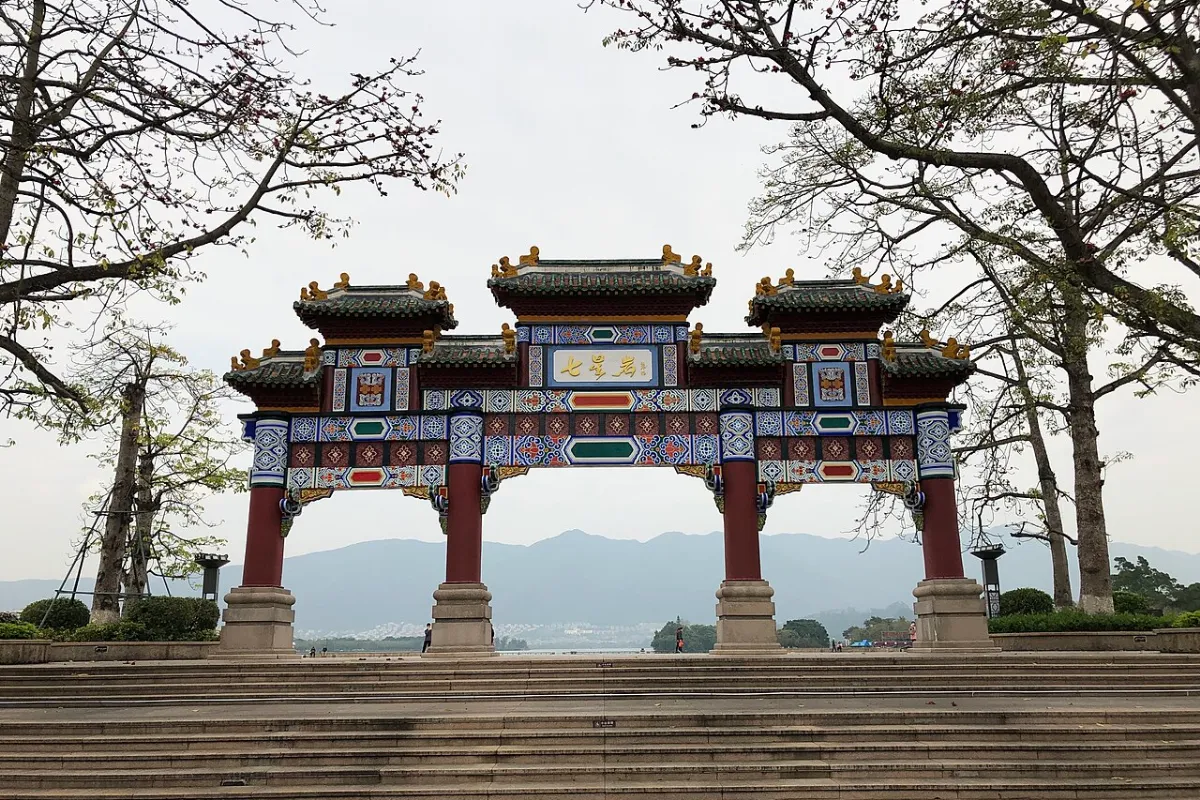
Why this place
Zhaoqing sits beside a lake formed where the Xi River flooded around seven limestone hills, and the resulting scenery — the Seven Star Crags — is the classic landscape of Guangdong. The city also made the inkstones that Chinese calligraphers prized most, and it guards a stretch of the Xi River with old walls and pagodas. The city has long been a resting point for boats plying the Xi River, and its combination of a karst lake, an old county wall and a scholar's inkstone trade gives it a cultural depth that most quick visitors miss on a single pass.
People and culture
- The Duan inkstone, quarried from a bed on the Xi River, was for centuries the most prized inkstone among Chinese scholars and calligraphers.
- The Seven Star Crags (Qixing Yan) gave Zhaoqing its identity as the classic Guangdong karst lake scene, painted for generations.
- Zhaoqing's old city wall and the Chongxi Pagoda survive from the Ming-era river defences.
- Dinghu Mountain above the city was one of China's early nature reserves, protecting subtropical forest.
- The local wrapped zongzi, a large elaborate sticky-rice parcel, is a Zhaoqing festival speciality.
What to see
- The Seven Star Crags (Qixing Yan) and the lake, best seen by rented boat.
- The old city wall and the Chongxi Pagoda on the Xi River.
- Dinghu Mountain, a forested hill with a nature reserve and a lake.
- The Duan inkstone workshops, where the stones are still cut and carved.
- The Star Lake waterfront and the evening promenade of the new district.
- The surrounding karst hills and the villages along the Xi River.
What to eat
- The wrapped zongzi a large elaborate sticky-rice parcel, the local festival version.
- Xi River fish and the local Cantonese coastal cooking.
- Duan-inkstone-themed teas and snacks sold near the workshops.
- River shellfish and freshwater prawns from the lake.
How to plan
Spend a day and a half. Morning boat on the Seven Star Crags lake and a walk of the old city wall and Chongxi Pagoda, then the Duan inkstone workshops before lunch. Afternoon at Dinghu Mountain for the forest and the lake, returning for a zongzi and river-fish dinner in the old quarter. If time allows, end the day with a tea ceremony using a local Duan inkstone, which ties the city's celebrated craft directly to its lakeside calm and gives the visit a scholar's punctuation.
Best time
October–December and March–April
Practical tips
- The lake boats are cheapest at the public jetties; avoid touts at the roadside.
- Dinghu Mountain is busy on holidays; go midweek for the trails.
- Inkstone shops range from genuine to tourist — compare before buying.
HSKHSK level 3
This browser has no speech synthesis, so the ▶ buttons stay silent. Everything else works — Chrome, Edge and Safari can read the sounds aloud.