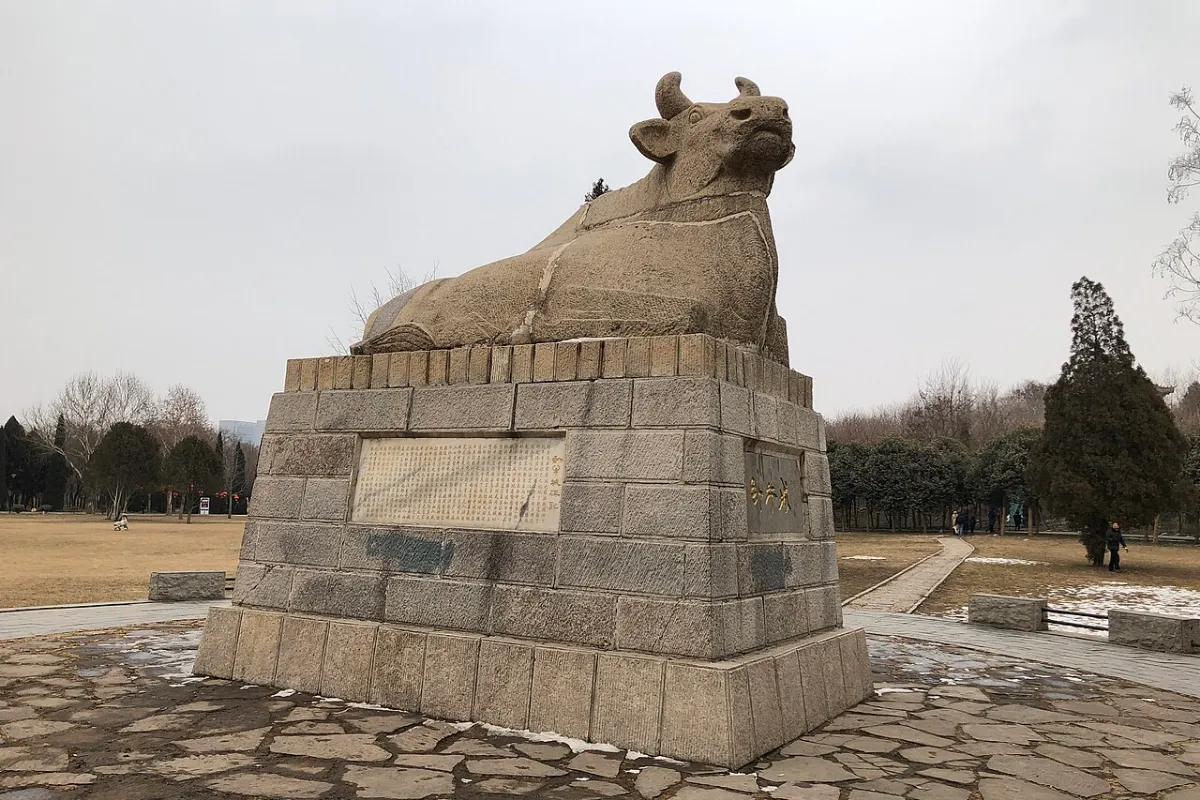
Why this place
Xingtai sits between the Taihang Mountains and the North China Plain and has been a prefecture since the Tang dynasty. It is a working Chinese city rather than a tourist one, but the surrounding mountains hold some of the earliest Buddhist rock carvings in China, and the old road that ran through here linked the plain to the passes of the Taihang, so its markets and temples sit on a very old line of travel.
People and culture
- Xingtai has been a prefecture seat since the Tang dynasty, and the old north–south road across the plain ran through it, which is why so many way-stations and temples accumulated here.
- The Kaiyuan Temple in the old city holds a beamless brick hall and a great bell; the site has been a Buddhist centre for over a thousand years under changing names.
- The Tianningsi Pagoda is a Tang-dynasty brick tower still standing in the modern city, one of the few above-ground marks of that early era left downtown.
- The Taihang foothills west of Xingtai were a refuge and a route for armies and monks alike, which is why the caves and cliff temples are concentrated in the hills rather than the plain.
What to see
- Tianningsi Pagoda, a Tang-dynasty brick pagoda in the old city
- The Taihang range west of the city deep gorges and the Kangtai caves
- Qinghe, upriver, historically the centre of China's wool trade
- Kaiyuan Temple and its beamless hall in the old town
- Xingtai Canyon (Holy Water) in the Taihang, a day walk from the city
- The White Cloud cave system at Kongshan, limestone chambers open to visitors
What to eat
- Northern steamed buns and millet porridge, the plain's everyday grain bowl
- Xingtai dates and walnuts from the mountain counties, dried and sold by the kilo
- Hand-pulled noodles with braised pork, a road-town staple
How to plan
Use Xingtai as a base and head west. Morning at the Tianningsi Pagoda and Kaiyuan Temple in the old town, then a bus into the Taihang for the Holy Water Canyon or the Kongshan caves — allow half a day in the hills. Return for the date and walnut markets near the station. A second day can reach Qinghe for the wool-trade old town. Xingtai is best treated as a one-night stop on the line between Shijiazhuang and Handan rather than a destination in itself.
Best time
April–May and September–October
Practical tips
- The mountain sights need a car or a booked driver; public buses to the Taihang are infrequent
- Xingtai station is on the Beijing–Guangzhou line, so through trains are easy to catch
- The caves are cool and damp — bring a layer even in summer
HSKHSK level 2
This browser has no speech synthesis, so the ▶ buttons stay silent. Everything else works — Chrome, Edge and Safari can read the sounds aloud.