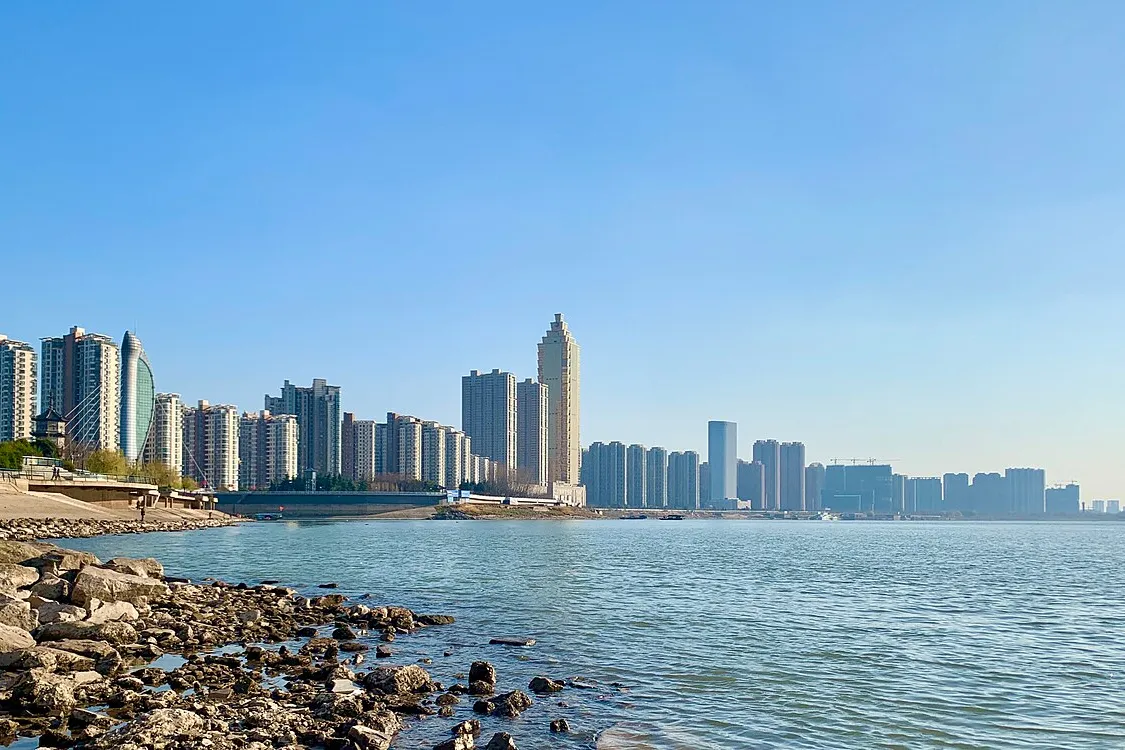
Why this place
Wuhu is a Yangtze port city, and the surrounding counties produced some of the finest bronze work of the Western Zhou period — the bronzes in the local museum are genuinely first-rate. It is also the gateway to Mount Jiuhua, one of the four sacred Buddhist mountains, and a manufacturing town whose river front is being rebuilt. For travellers the Zhou bronzes are the reason to stop.
People and culture
- The hills around Wuhu yielded some of the finest Western Zhou bronzes in the south, and the local museum's ritual vessels are among the best outside the national collection.
- Wuhu is the northern gateway to Mount Jiuhua, one of China's four sacred Buddhist mountains, two hours south by road.
- The city's position on the Yangtze made it a port and treaty port, and the river front is now a rebuilt promenade.
- The local bronze-casting tradition connects to the Chu and Wu states that fought over this ground three thousand years ago.
- Wuhu's crab-roe soup dumplings are a regional speciality carried by the river trade.
- The city's name means a lake fords, from the shallow crossing on the Yangtze that the old port grew around.
- Wuhu's painted iron (iron painting) is a local craft where steel wire is shaped into pictures, and the workshop keeps the old masters at work.
What to see
- Wuhu Museum's Zhou bronzes the reason to come if you like early metalwork
- The Yangtze riverside and the old ferry district
- Jiuhua Mountain, one of China's four sacred Buddhist mountains, 2 hours south
- The Zheshan Park and the old city hill
- The Wuhu iron painting workshop, a local craft
- The Qingyi River and the canal lanes
What to eat
- Wuhu crab-roe soup dumplings and river fish
- Anhui-style smoked and cured meats
- The river shrimp and the steamed buns of the port
- The local wheat cakes and the dried-fish pickle
How to plan
Spend a morning at the Wuhu Museum for the Zhou bronzes, then the riverside and the old ferry district. A full day goes to Jiuhua Mountain south of the city for the temples and the pilgrims. Wuhu is on the high-speed line between Nanjing and Huangshan, about an hour from Nanjing, so it fits a bronze-and-mountain stop.
Best time
April–May and September–November
Practical tips
- The museum's bronzes are the draw; it closes for lunch, so time your visit and allow two hours.
- Jiuhua Mountain is a long day; start early, as the temples are spread up the slopes.
- Wuhu's station serves both the high-speed and the ordinary lines; check which platform your train uses.
HSKHSK level 3
This browser has no speech synthesis, so the ▶ buttons stay silent. Everything else works — Chrome, Edge and Safari can read the sounds aloud.