Why this place
Tongchuan, an hour north of Xi'an on the loess plateau, is best known for the Yaozhou kilns that from the Tang through the Song produced China's finest olive-green celadon, carved with peony and lotus scrolls. The kiln site at Huangbao is one of the great ceramic centres of the Song, and its wares shaped a whole later tradition of southern green ware. The city also holds the Yuhua Palace, a Tang summer retreat built for the emperor Xuanzong, and a cluster of Buddhist grottoes cut into the valleys north of town, making it a quiet stop for anyone interested in craft and early medieval art away from the crowds.
People and culture
- Yaozhou celadon is celebrated for its jade-green glaze and incised floral scrolls; the Song court prized these wares, and the kilns here set the standard that later Longquan green ware followed for centuries.
- The craft of celadon carving is patient work: potters threw the bowl or dish, then cut flowing peony scrolls into the clay before a single glaze turned the whole surface green, a technique still shown at the site museum.
- Tongchuan's Yuhua Palace was one of several Tang imperial summer palaces built in the cool northern hills; little stands today, but the foundations reveal a court that migrated seasonally away from Chang'an's heat.
- The region's Buddhist grottoes, including the Qianfo sites, were cut along the trade road north of the Wei valley, part of the same current of faith that produced the great cave temples further west.
What to see
- The Yaozhou Kiln Museum and site at Huangbao, with excavated dragon kilns, waster piles and finished Song celadon on display.
- The Yuhua Palace ruins, the Tang summer-palace site set among wooded hills north of the city.
- The Qianfo (Thousand Buddha) Grottoes, cave temples cut into a cliff beside a stream, with Tang and later carvings.
- Mt Xiangshan, a forested ridge with temples and the best viewpoint over the loess country around the city.
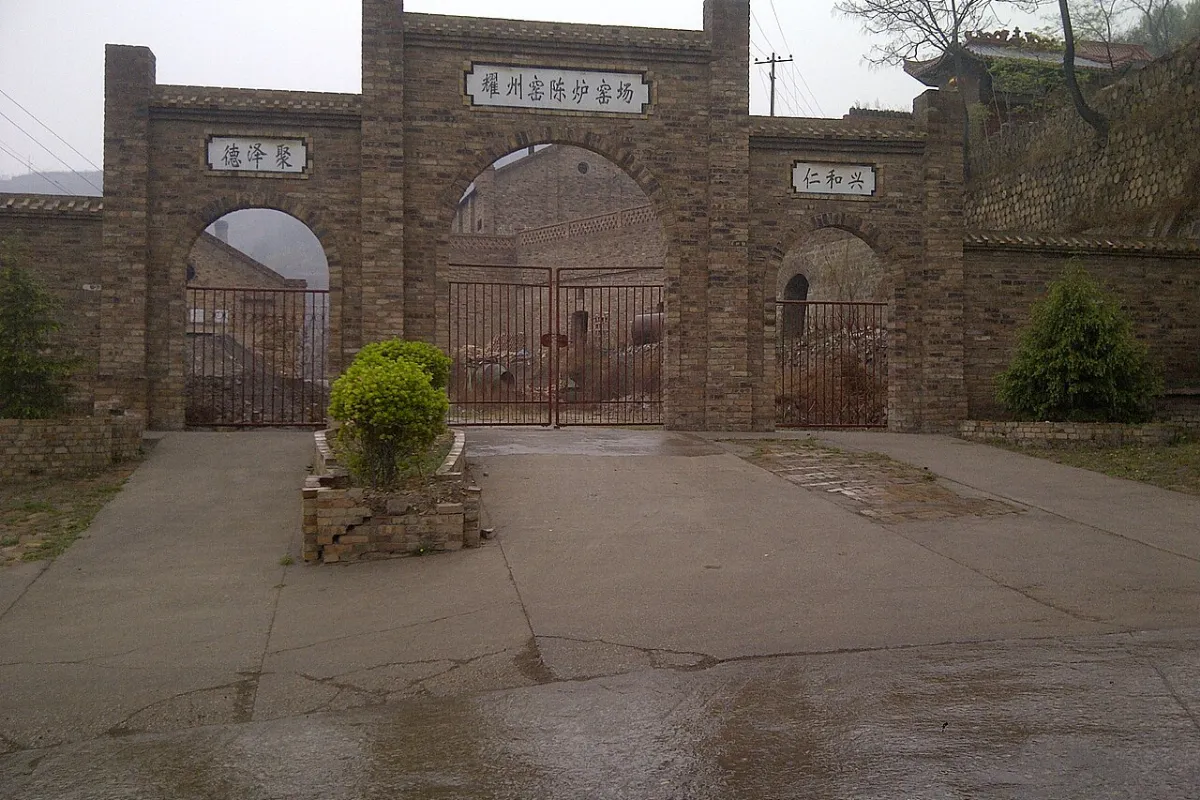
- Chenlu ancient kiln town, where ceramic firing has continued for a thousand years and smoke still rises from family workshops.
- The Yaozhou district old town and the nearby Zhaojin revolutionary base area in the mountains to the north.
What to eat
- Shaanxi-style noodles, especially qishan saozi mian, a sour-and-spicy minced-pork noodle that is a local staple across the Guanzhong plain.
- Yaodong huoshao, a crisp baked flatbread eaten with lamb or vegetable fillings, common in the city's morning markets.
- The loess-plateau larder of potatoes, beans and cabbages stewed with chilli, plus the region's sweet apples grown on terraced slopes.
- Teahouses near the kiln museum where you can pair local dishes with green tea and watch potters at work.
How to plan
Day 1: spend the morning at the Yaozhou Kiln Museum and the working kilns at Chenlu town, watching potters throw and carve celadon, then lunch on noodles in Huangbao. Day 2: drive north to the Yuhua Palace ruins and the Qianfo Grottoes, then climb Mt Xiangshan for the view, returning to the city for a hotpot of local lamb. Both days are short drives on regional roads, and Tongchuan makes an easy overnight loop from Xi'an by bus or train.
Best time
March-May and September-November
Practical tips
- Tongchuan is easiest as a day or overnight trip from Xi'an, with regular buses and trains, and the kiln sites sit 30 to 40 minutes outside the centre.
- Chenlu is a living ceramic village, not a museum, so ask before photographing family workshops and go in the morning when firing is busiest.
- Winter on the loess plateau is cold and the sites are open-air, so spring and autumn give the best light for the celadon glaze and the hill views.
HSKHSK level 3
Characters煤
This browser has no speech synthesis, so the ▶ buttons stay silent. Everything else works — Chrome, Edge and Safari can read the sounds aloud.