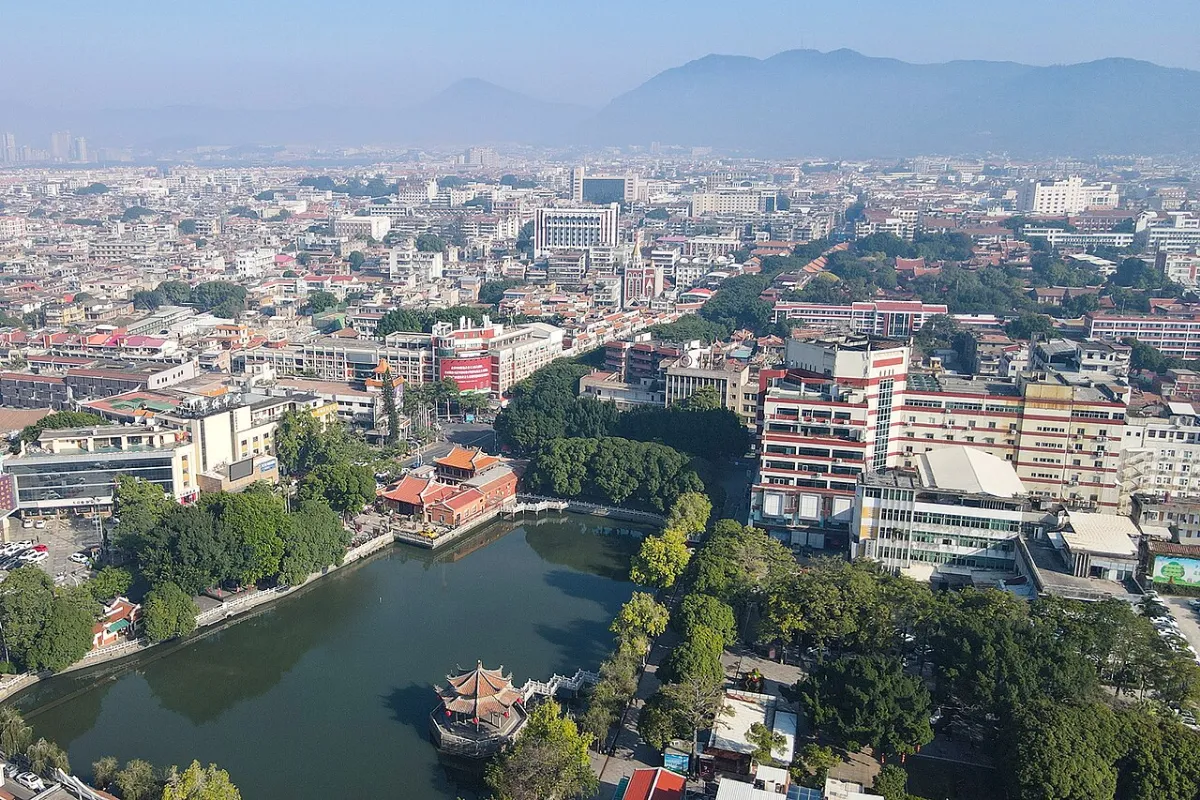
Why this place
Quanzhou was the great ocean port of Song and Yuan China, the harbour that Marco Polo called Zayton and that Ibn Battuta also described, where ships left for Southeast Asia, India and the Arab world. In its heyday it held trading quarters for Arabs, Persians, Hindus and Christians within a few streets, and the remains are still physical: a 1009 mosque, Hindu pillar carvings, Nestorian and Manichaean stones, and the oldest Islamic tombs in China. UNESCO listed it in 2021 as a serial world heritage site of 22 monuments.
People and culture
- Quanzhou was the world's busiest port in the 12th and 13th centuries, and Marco Polo's 'Zayton' is this city; UNESCO listed it in 2021 for 22 sites spread across the town rather than one monument — a whole trading city, not a single ruin.
- Because every trading nation berthed here, the city still holds a Buddhist monastery, a 1009 mosque, a Hindu temple, a Manichaean shrine and a sea-goddess temple within walking distance; locals call it the 'museum of the world's religions'.
- Nanyin, the slow chamber music played here for a thousand years, and the marionette theatre, are both on the national intangible-heritage list and are still performed for local audiences, not only at shows for visitors.
- Quanzhou's Anxi hills grow Tieguanyin, the iron-goddess oolong, one of China's most famous teas, and the tea trade was a later face of the same merchant city that once fitted out ocean-going junks.
- The sea-goddess Mazu is worshipped at coastal temples here too, and the city's boatmen's customs — the puppets, the processions — tie the old port to the working Fujian coast of today.
What to see
- Qingjing Mosque, built in 1009 and the oldest standing mosque in China
- Kaiyuan Temple with its twin stone pagodas and Hindu carvings reused in the pillars
- The medieval stone-beam bridges Luoyang Bridge and Anping Bridge
- The Maritime Museum, with the Song-dynasty ship raised from the harbour
- Quanzhou puppet theatre and Nanyin music, both still staged in the city
- The Cao'an Manichaean temple at Jinjiang, the only surviving one of its kind
What to eat
- Oyster omelette and beef soup the Quanzhou street pair
- Tieguanyin oolong from the Anxi hills, brewed the local way
- Wheat-noodle soup (mian xian hu) with oysters and greens
- Ginger duck and the braised rice meals of the old quarter
How to plan
Two days. Day one in the old city: Kaiyuan Temple and its twin pagodas in the morning, then the Qingjing Mosque and the lane of stone-carving shops, and the Maritime Museum before it closes. Day two the water works: Luoyang Bridge to the north and Anping Bridge to the south, with a puppet show or a Nanyin concert in between — both have daytime performances. If you like tea, add an afternoon run out to the Anxi hills for a Tieguanyin tasting.
Best time
March–May and October–December
Practical tips
- Quanzhou is the most historically important city many visitors skip — give it two full days, not a stop on the way to Xiamen
- The puppet and Nanyin shows run on a fixed daytime schedule; check the day's times so you don't miss them
- The old Moslem and Hindu stones are scattered across several sites — a local guide or the museum map saves you hunting
This browser has no speech synthesis, so the ▶ buttons stay silent. Everything else works — Chrome, Edge and Safari can read the sounds aloud.