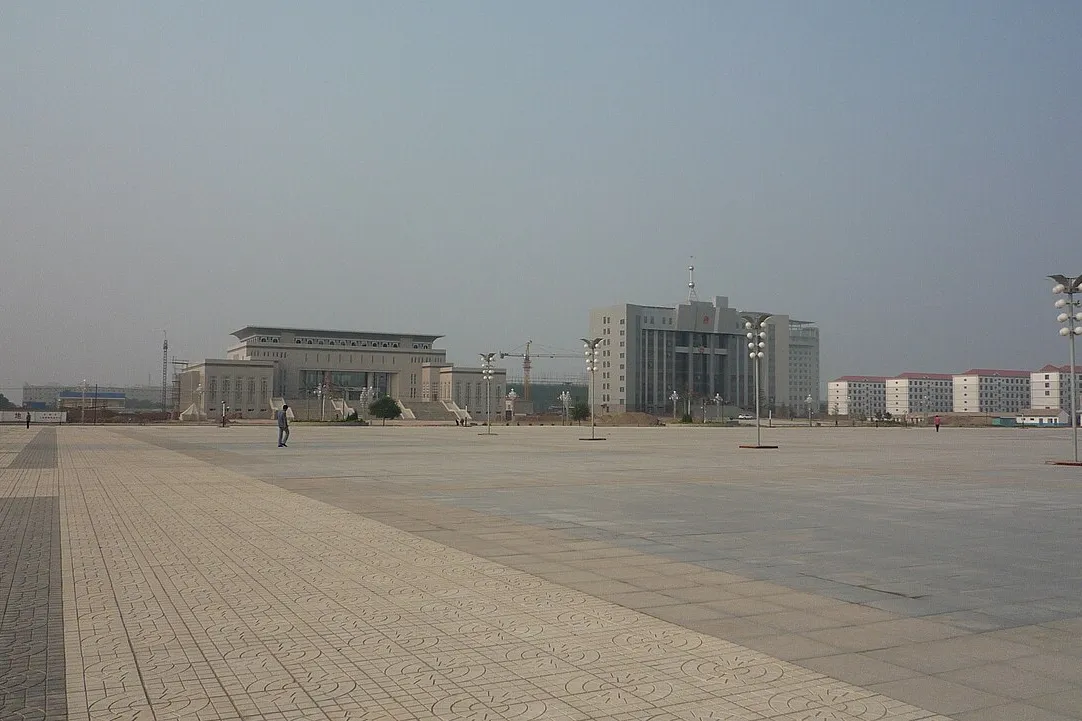
Why this place
Qingyang lies on the loess plateau in eastern Gansu, and it has some of the most dramatic loess landforms in China, deep ravines, earth bridges and cave dwellings cut into the soft yellow soil over millennia. It is also where the ancestors of the Zhou dynasty are said to have farmed before moving east to found a kingdom, and its red cliffs and gorges make it a quiet alternative to the busy corridor. The city is known for its broomcorn millet and its lamb broth.
People and culture
- The loess landforms around Qingyang, with earth bridges and cave columns, are among the deepest ravines cut into the plateau anywhere in China.
- Qingyang is tied to the Zhou dynasty's ancestors, who are said to have farmed here before rising to found the long-lived Zhou kingdom in the west.
- The Beishiku (North) Temple grottoes near the city hold Buddhist carvings cut into the red cliff, a lesser-known cave site of the corridor's edge.
- The plateau's cave dwellings, dug into the loess for warmth, are still home to farmers, a living vernacular architecture of the yellow earth.
What to see
- The loess landforms and the earth-bridge ravines at the surrounding sites, best viewed from the rim.
- The Zhou ancestral sites and the Beishiku Temple grottoes cut into the red cliff.
- The Yellow River's tributary gorges and the old county towns of the plateau.
- The Qingyang museum, with Neolithic and Zhou material from the region.
- The red-cliff valleys and the terraced fields of the rural counties.
- The loess cave-village visits, where farmers still live in dug-out homes.
What to eat
- Loess-plateau cooking of millet, buckwheat and lamb, the everyday diet of the ravines.
- Qingyang huangmi broomcorn millet and the local yangrou lamb soup, a warming bowl.
- Hand-pulled noodles and clay-oven flatbreads, the northern staple.
- Hui Muslim skewers and the region's dried fruit from the market.
How to plan
Day 1: explore the loess ravines and earth bridges at the edge of the plateau, then visit the Qingyang museum for the Zhou and Neolithic finds. Day 2: head to the Beishiku Temple grottoes in the red cliff and a cave village to see the dug-out homes, or drive the tributary gorges. Qingyang is in eastern Gansu near the Shaanxi border, so reach it from Xi'an or Lanzhou by road or rail as a one- or two-day detour.
Best time
May-October
Practical tips
- Qingyang's landscape is its draw, so hire a driver to reach the ravines and cave villages, which are far apart and rural.
- The loess cliffs are unstable after rain, so stay on marked viewpoints and do not climb the ravine walls.
- Qingyang is off the main corridor line, so plan transport from Xi'an or Lanzhou rather than expecting frequent trains.
HSKHSK level 3
This browser has no speech synthesis, so the ▶ buttons stay silent. Everything else works — Chrome, Edge and Safari can read the sounds aloud.