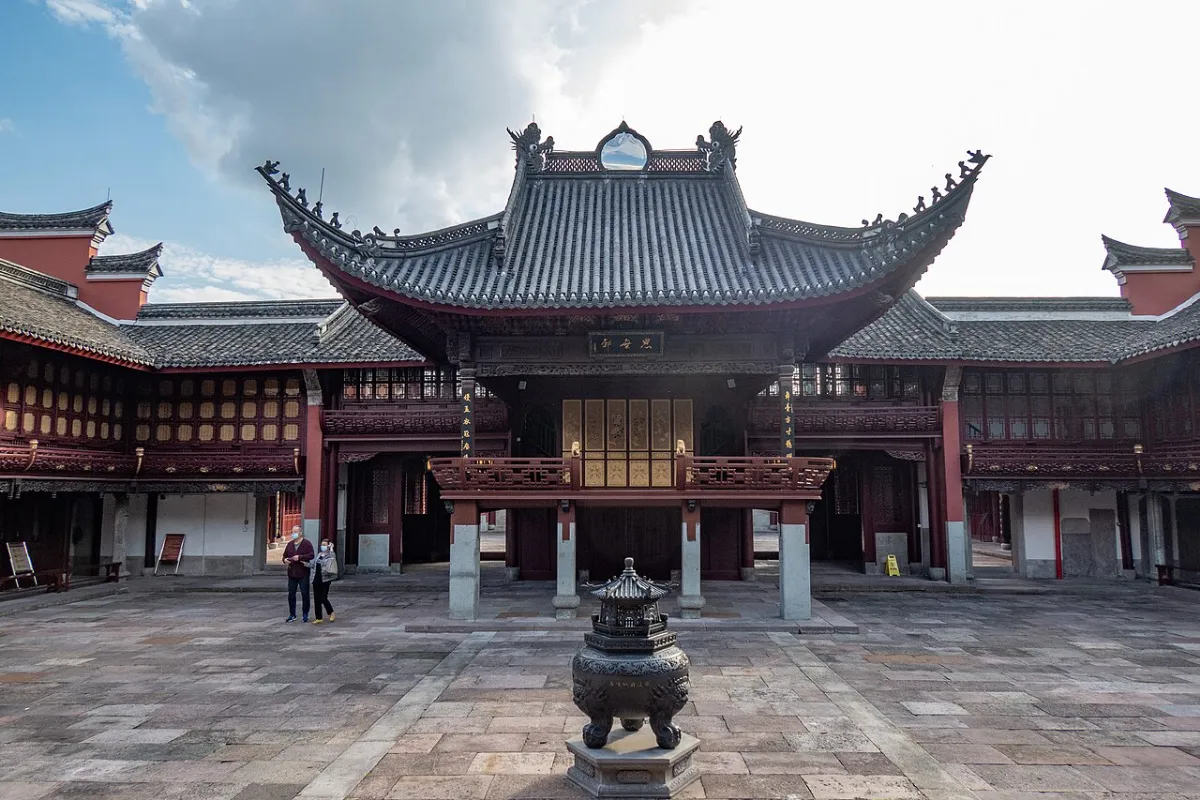
Why this place
Ningbo has been a major port since the Tang dynasty, and its Tianyi Pavilion is the oldest surviving private library in China. It is a wealthy, well-kept city with a strong merchant tradition — this is where many of the overseas Chinese communities of Shanghai and Hong Kong trace their roots. The old Bund on the Yong River and the Buddhist mountains in the hills give it more to do than its size suggests.
People and culture
- Ningbo's port traded with Japan and the south seas from the Tang, and the city was one of the treaty ports opened in the 1840s, which is why its merchant houses are everywhere.
- The Tianyi Pavilion, built in the 1560s, is the oldest private library still standing in China, and its garden was laid out to protect the books from fire and damp.
- Ningbo was the birthplace of many overseas Chinese families, and its banking and shop traditions spread to Shanghai and Hong Kong from here.
- The hills south of the city hold Tiantong and Asoka temples, both key sites in the Zen school that later travelled to Japan.
- The old Bund on the Yong River was the foreign trading front, and its warehouses are now a riverside promenade.
What to see
- Tianyi Pavilion and the old library garden the oldest private library in China
- The old Bund on the Yong River, with its early-20th-century banks and warehouses
- Tiantong Temple and Asoka Temple in the hills, both important in Zen Buddhism
- Putuoshan, the Buddhist island, reachable by ferry from Ningbo's port
- The Ningbo Museum, a building by Wang Shu made of recycled tiles
- The Tianfeng Pagoda and the old town lanes
What to eat
- Ningbo seafood the coastal catch is excellent, especially in winter
- Ningbo rice cakes (nian gao) and the sweet fermented rice-cake soup
- Salted crab and pickled seafood, the local style
- The river shrimp and the steamed buns of the old port
How to plan
Spend a morning at the Tianyi Pavilion and its garden, then the old Bund for the warehouses and the river. Afternoon goes to the Ningbo Museum, or a ferry to Putuoshan if you want the island temples (allow a full day). Ningbo is two hours from Shanghai by rail and a short hop from Shaoxing, so it fits a coastal stop between the two.
Best time
March–May and September–November
Practical tips
- Putuoshan is a full-day trip by ferry; check the weather, as the crossing is cancelled in rough seas.
- Ningbo seafood is best in winter when the catch is rich; the markets open at dawn.
- The Tianyi Pavilion closes for lunch like many Chinese museums; time your visit around it.
HSKHSK level 3
This browser has no speech synthesis, so the ▶ buttons stay silent. Everything else works — Chrome, Edge and Safari can read the sounds aloud.