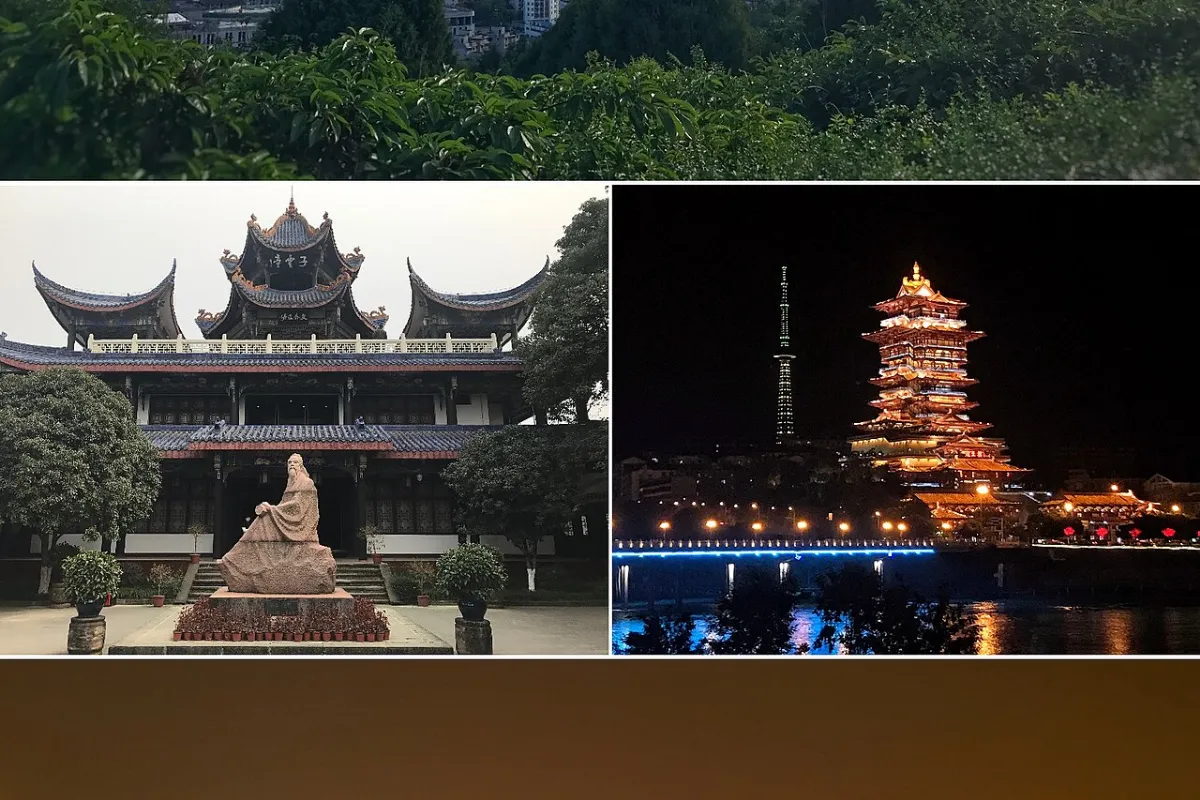
Why this place
Mianyang is a science and defence-technology city, and much of China nuclear and aerospace research has been based here since the 1950s, yet it also holds the earliest recorded Taoist sites on Xishan hill, with a history reaching back to the Han dynasty. It is the rail head before the mountain road north toward Jiuzhaigou and Huanglong, making it both a gateway to the plateau and a centre of industry, and a useful break on the Chengdu to Jiuzhaigou road.
People and culture
- Mianyang role as a national science city grew after the 1950s, with institutes working on nuclear, aerospace and materials research concentrated in the hills south of the city.
- The Xishan and Fule Mountain Taoist sites record the earliest organised Taoist activity in China, linked to the Han-era figure of the region and still active today.
- The city is the gateway to the northern plateau route toward Jiuzhaigou and Huanglong, a role that shaped its roads, rail and bus stations.
- Local folk memory includes the Three Kingdoms general Jiang Wei, connected to the region hill defences and remembered at small shrines.
- The Fujiang river trade gave Mianyang its old town character, with teahouses and guild halls along the water.
What to see
- The Xishan Taoist sites and Fule Mountain, with early temples, cliff inscriptions and a hilltop view.
- The Science City exhibition halls explaining the research history, some open by appointment only.
- The Fujiang riverside and the city parks, the pleasant core of modern Mianyang.
- The Jiuzhaigou and Huanglong transfer point, Mianyang is the last big rail stop before the mountains.
- The Qianfo, Thousand Buddha, cliff carvings in the countryside north of the city.
- The Yuewang Tower, a rebuilt overlook on the river with evening light shows.
What to eat
- Mianyang rice noodles, a breakfast staple in a clear or spicy broth, eaten at street stalls.
- Sichuan cooking with local pickled vegetables and cured pork, milder than the east of the province.
- Fenzheng, steamed pork with rice flour, a soft local speciality steamed in a bowl.
- River fish from the Fujiang, cooked simply with ginger, chilli and spring onion.
How to plan
Day 1: the Xishan Taoist sites and Fule Mountain in the morning, then the riverside parks and Yuewang Tower for the view and the evening lights. Day 2: the Science City museums and a trip out to the Qianfo cliff carvings. Mianyang is an hour by high-speed rail from Chengdu and is the launch point for buses north to Jiuzhaigou, so combine a cultural day with onward plateau travel if heading that way, and book mountain buses ahead in season.
Best time
March to May and September to November; spring is especially green in the hills.
Practical tips
- If you are continuing to Jiuzhaigou, book the mountain buses in Mianyang ahead because seats fill in season.
- The Taoist sites are on the city edge; use a taxi or bus and wear decent shoes for the climbs.
- Science City facilities are often by appointment; check opening days before you go.
HSKHSK level 3
This browser has no speech synthesis, so the ▶ buttons stay silent. Everything else works — Chrome, Edge and Safari can read the sounds aloud.