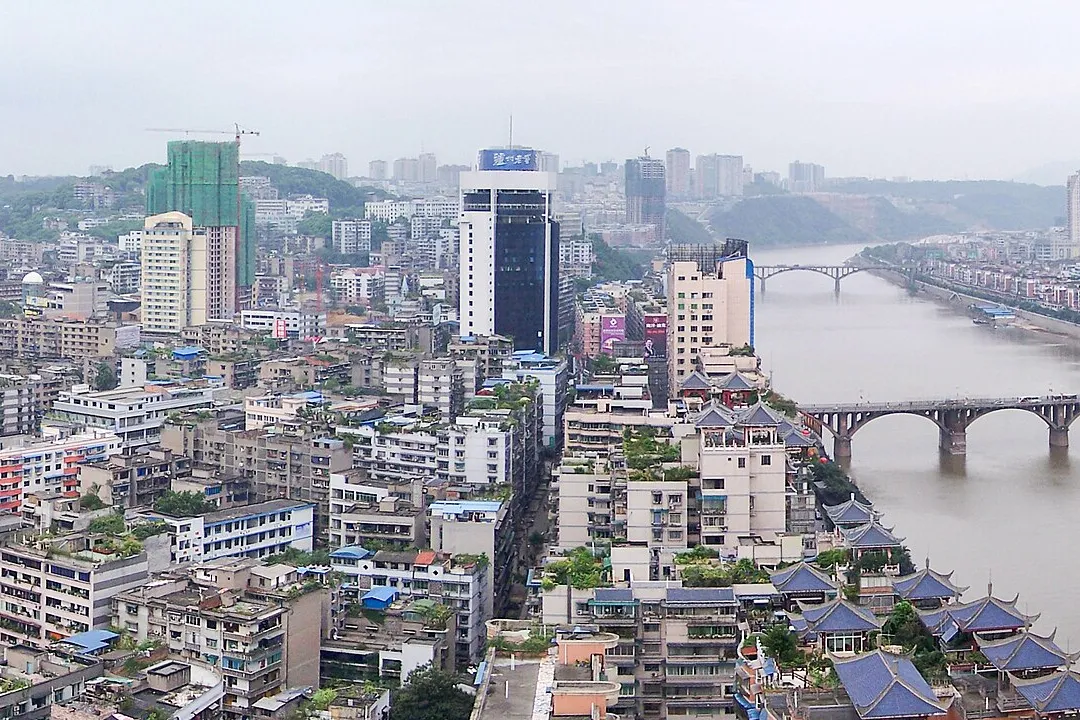
Why this place
Luzhou sits where the Yangtze meets the Tuo River, and that confluence made it a distilling centre whose famous strong liquor is still made in fermentation pits working continuously since the Ming dynasty. The old riverside town and the bamboo forests of the southern hills round out a city that is more about living craft than monuments. It is one of the birthplaces of the baijiu tradition that defines Chinese drinking.
People and culture
- Luzhou Laojiao fermentation pits date to the Ming dynasty and have been in continuous use for centuries, making them a rare example of an unbroken liquor-making lineage.
- The city position at the Yangtze and Tuo confluence turned it into a river port and a centre for shipping salt, grain and liquor downstream.
- Baijiu distillation here follows a solid-state fermenting method tied to the local climate and the old pits, a craft listed as national heritage.
- The southern hills hold bamboo seas and forest that have supplied building material and a quiet rural counterpoint to the river town.
What to see
- The Luzhou Laojiao liquor pits and museum, with Ming-dynasty fermentation cellars still in use.
- The Yangtze and Tuo river confluence and the old riverside quarter.
- Fobao forest and the bamboo sea in the southern hills.
- The Bell and Drum Tower and the remaining old-town lanes.
- The Longnao bridge, a stone Yuan-era bridge in the countryside.
- Zhangba longan groves, where the fruit is harvested in late summer.
What to eat
- Luzhou baijiu, of course, sampled at the distillery or in the local wine shops.
- Yellow-braised river fish from the Yangtze and Tuo.
- Sichuan cooking with a strong local style, heavy on preserved vegetable and chilli.
- Longan fruit in season and the river-town snack culture along the waterfront.
How to plan
Day 1: the Luzhou Laojiao pits and museum in the morning, then the riverside old town and the confluence viewpoint. Day 2: the bamboo sea and Fobao forest to the south for a day in the hills. Luzhou is compact; the central sights are a short taxi ride apart and the liquor site needs a guided look at the pits. Pair it with a river cruise or use it as a stop on the Chengdu to Chongqing to Yibin route.
Best time
March to May and September to November.
Practical tips
- Distillery tours may require advance booking and an ID check; ask at the visitor desk.
- The baijiu is strong, over 50 percent alcohol; taste, do not gulp, and arrange transport if you sample.
- The southern bamboo sites are an hour or more out; go early and return before dark.
HSKHSK level 3
This browser has no speech synthesis, so the ▶ buttons stay silent. Everything else works — Chrome, Edge and Safari can read the sounds aloud.