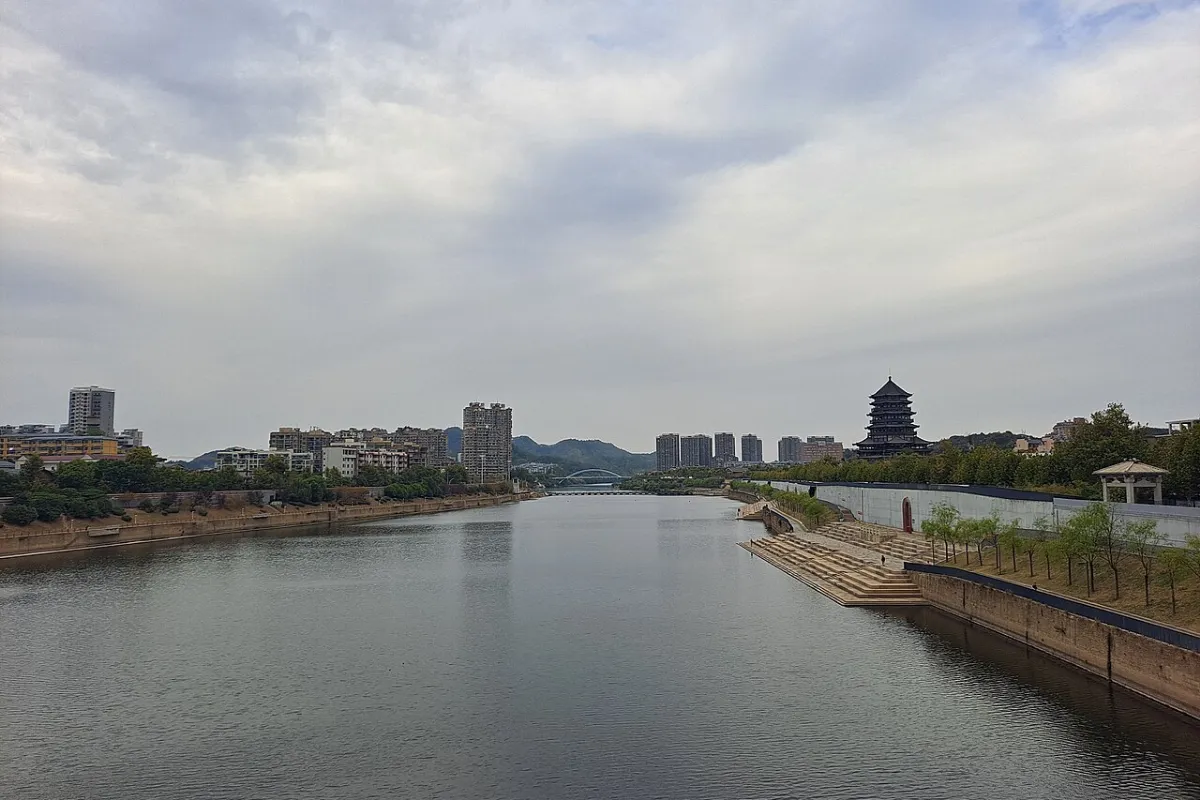
Why this place
Jingdezhen made porcelain for the Chinese court from the Song dynasty until the end of the empire, and for centuries almost all the finest porcelain in the world came from here — blue-and-white, celadon and famille rose. The old kiln villages, the imperial kiln site and the workshops are still working, and a generation of young ceramic artists has moved in, turning a manufacturing town into a live craft city.
People and culture
- Jingdezhen has been making porcelain for about 1,700 years, and since the Song it has been the kiln that supplied the emperor — the imperial factory site is now a museum holding the wasters the court refused to let out.
- Underglaze blue-and-white was developed and perfected here, and for centuries the city's output was the world's idea of 'china'; kaolin, the clay that makes hard-paste porcelain, is named after Gaoling village just outside the city.
- Whole careers were spent on one step: one workshop threw the wheel, another drew outlines, another filled colour, another fired — the hand-thrown and hand-painted techniques are on the national intangible-heritage list.
- Taoxichuan, a converted state ceramic factory, is where the current generation of potters works; the city has a real young art scene, not just a museum trade.
- Every commercial bowl and vase in the country is still sold here in bulk, which is why the wholesale market is worth an hour even if you buy nothing.
What to see
- The Imperial Kiln archaeological site and museum, showing the wasters smashed and buried by the court
- The ancient kiln cluster at Yaoli, a Ming–Qing kiln town in the hills
- Taoxichuan, a converted factory district full of galleries and studios
- The ceramics market at Fuliang, on Monday mornings one of the great markets of China
- The city Porcelain Museum, with wares from every dynasty
- The old town lanes around the Chang river where workshops still throw
What to eat
- Jingdezhen cold noodles (liang mi xian) with a peanut and chilli dressing
- Fried rice-crust bits (jiezha), a local snack
- Jiangxi country cooking: river fish, pickles and genuine heat
- The steamed 'porcelain-household' dishes of the old kiln villages
How to plan
Two days. Day one the imperial story: the Imperial Kiln site and the ceramics museum in the morning, then Taoxichuan in the afternoon and evening, when the studios and the night market are busy. Day two a half-day at Yaoli's old kiln town if you want the hills, or the Fuliang market on a Monday for the wholesale bustle. Book a pottery class if you want to throw something yourself — the city is the one place in China where you can.
Best time
April–May and October–November; the Fuliang market is Monday only
Practical tips
- If you want to buy ceramics, don't buy at the airport — buy at Fuliang market or Taoxichuan and have it shipped
- Firing takes days, so anything you commission has to be shipped rather than carried home
- The Fuliang wholesale market is Monday only and is for trade; the single-piece buyer should use the Taoxichuan studios
Characters火
This browser has no speech synthesis, so the ▶ buttons stay silent. Everything else works — Chrome, Edge and Safari can read the sounds aloud.