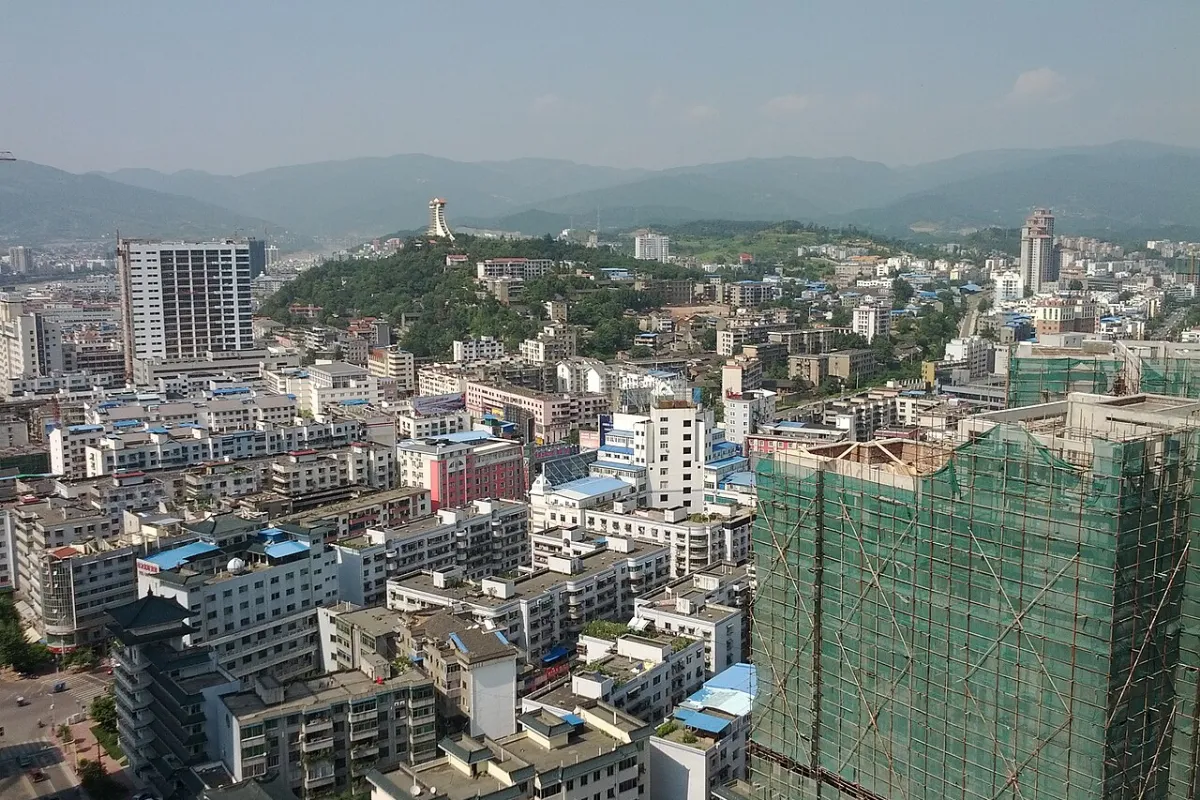
Why this place
Guangyuan guards the northern entrance to Sichuan where the ancient Shu road from the Wei valley crosses the mountains, and its Qianfoya cliff holds more than 7,000 Buddhist carvings cut in the Tang and Song, one of the largest such groups in China. It is also the main rail gateway toward Jiuzhaigou and a place steeped in the road-building legends of the Three Kingdoms, with passes and plank roads that decided campaigns.
People and culture
- The Qianfoya, Thousand Buddha Cliff, carvings line the old road with 7,000 plus images from the Tang and Song, a record of the route religious importance and a showcase of changing styles.
- The Shu Road through the Mingyue gorge used plank paths cut into the cliff face, an engineering feat of the imperial era that is still partly visible.
- Guangyuan is tied to the Three Kingdoms general Zhang Fei and the Jianmen Pass, the great gate on the northern road defended for centuries.
- The city is a transport hinge where rail from the north meets the Sichuan basin, a role it has played for a millennium as the door to the province.
What to see
- The Qianfoya cliff carvings beside the river and the old road, with caves and inscribed niches.
- The Jianmen Pass and the remaining plank-road sections of the Shu Road through the hills.
- The Mingyue gorge, where the cliff plank path was cut and the river runs narrow.
- Huangze Temple, a Tang-era shrine to the Empress Wu Zetian, who was born nearby.
- The Guangyuan railway bridge and riverfront, marking the gateway role of the city.
- The Zhaohua ancient town, a preserved walled settlement on the river with old lanes.
What to eat
- Northern Sichuan cooking, hearty, with cured pork and river fish braised in chilli.
- Guangyuan walnut dishes, from a protected local crop used in both savoury and sweet food.
- Hot pot in the local style, with more beef and offal than the south of the province.
- River fish and cold noodles along the old-town lanes, cheap and filling.
How to plan
Day 1: the Qianfoya carvings and the Mingyue gorge plank road in the morning, then Huangze Temple and its Tang statue. Day 2: the Jianmen Pass and Zhaohua ancient town, best reached by hired car for the cliff-road loop. Guangyuan is the rail gateway from the north, so arrive, spend two days on the road-and-cliff history, and continue south to Chengdu or west toward Jiuzhaigou; local buses reach the passes but a car is convenient.
Best time
March to May and September to November; autumn colours are good in the passes.
Practical tips
- The Jianmen Pass is a drive out of town; hire a car or join a tour for the cliff-road sites.
- Guangyuan is cold in winter; the cliff sites are exposed, so dress for wind and bring a layer.
- It is the main transfer point for Jiuzhaigou-bound buses from the north; book early in season.
HSKHSK level 3
This browser has no speech synthesis, so the ▶ buttons stay silent. Everything else works — Chrome, Edge and Safari can read the sounds aloud.