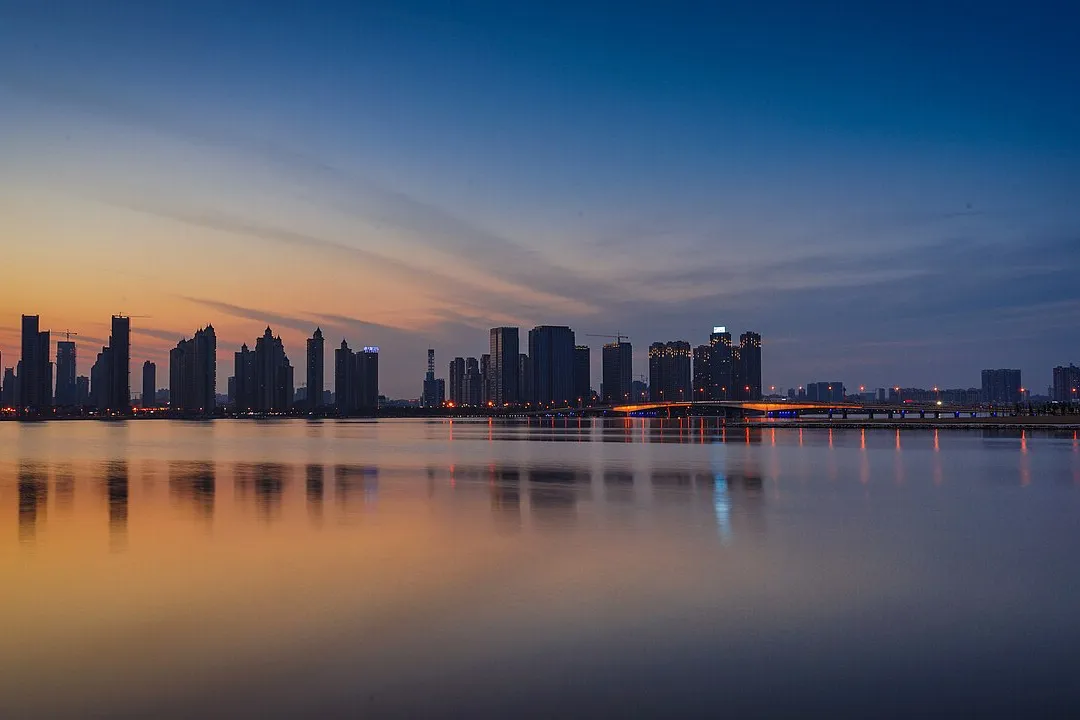
Why this place
Bengbu grew up where the Tianjin–Pukou railway crossed the Huai River, which turned a small river town into a regional transport hub. The Huai River itself is one of China's great dividing lines between north and south — this is where rice and wheat country meet, and where the river's floods shaped the plain's history.
People and culture
- Bengbu was born where the north–south railway met the Huai River, and the junction is why the small town became a hub of the plain.
- The Huai River is the classic dividing line between rice (south) and wheat (north) China, so the local food mixes both.
- The river's floods shaped the modern history of the plain, and the flood-control works at Bengbu are a feat of engineering you can see from the bridges.
- Zhanggongshan and Longzi Lake are the city's green lungs, built on the flat plain that war and water left open.
- The old railway district still has its early-20th-century layout, a rare piece of planning from the line's first years.
- The name Bengbu means a clam port, from the mussels the river once yielded, a small clue to the plain's old abundance.
- The surrounding plain is one of China's main wheat baskets, and the grain port at Bengbu still ships the harvest north and south.
What to see
- The Huai River waterfront and the flood-control works, central to the region's modern history
- Zhanggongshan and the Longzi Lake parks
- The old railway district, which still has its early-20th-century layout
- The Bengbu Museum, for the river and rail history
- The Tuohu Lake and the wetland to the north
- The Huai river bridge and the grain port
What to eat
- Bengbu is a noodle town Huai River fish and the local spicy noodles
- The local dried beef and spiced snacks
- The river shrimp and the steamed buns of the plain
- The wheat cakes and the fermented vegetables
How to plan
Spend a morning on the Huai River waterfront and the flood works, then the old railway district for the early planning. Afternoon goes to Zhanggongshan park or the Tuohu Lake wetland. Bengbu is on the Beijing–Shanghai high-speed line, about two hours from both, so it works as a rail break rather than a destination.
Best time
April–May and September–October
Practical tips
- The Huai River bridge gives the best view of the flood works; go on foot, not by car over the bridge.
- Bengbu is a through-stop; most visitors change trains here, so keep plans light.
- The plain is flat and hot in summer; bring water and a hat for the riverside walks.
HSKHSK level 2
This browser has no speech synthesis, so the ▶ buttons stay silent. Everything else works — Chrome, Edge and Safari can read the sounds aloud.