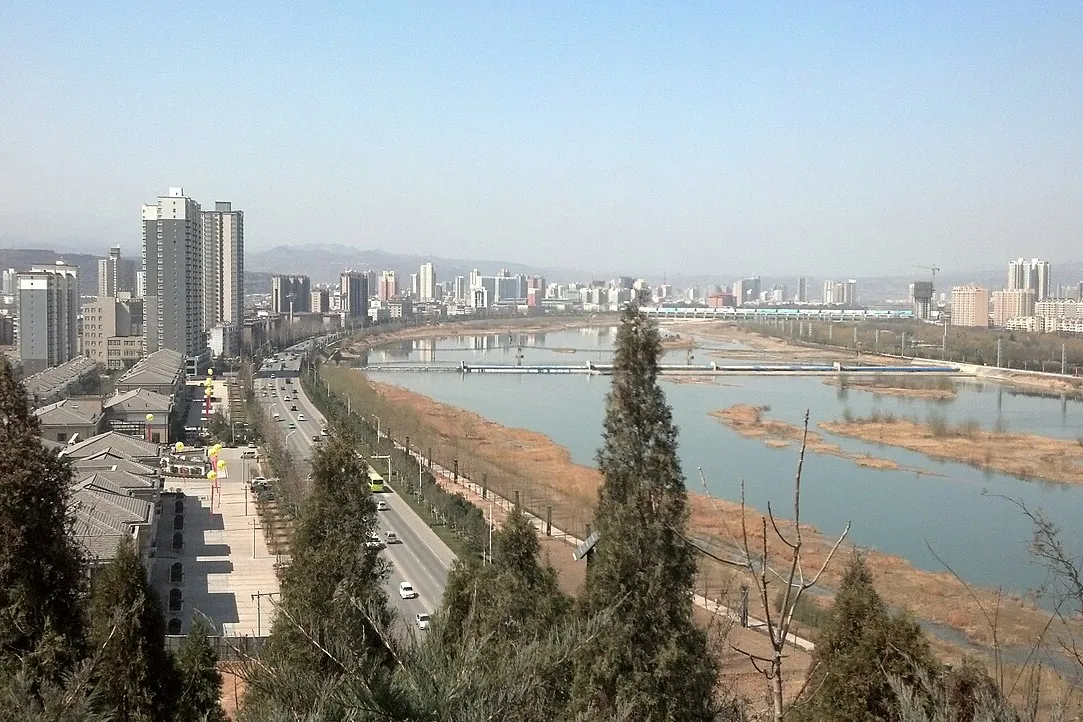
Why this place
Baoji sits where the Wei River valley narrows into the Qinling Mountains in western Shaanxi, and it is one of the richest sources of ancient Chinese bronzes ever excavated, with Western Zhou ritual vessels carrying long inscriptions that record the politics and wars of the eleventh century BCE. The city is also the gateway to Taibai, the highest peak of the Qinling range, and to Famen Temple, whose Tang underground palace concealed a finger bone of the Buddha. For travellers Baoji combines a first-rate bronze museum, a sacred mountain pass and a quieter alternative to the Xi'an crowds, all within an hour or two by high-speed rail.
People and culture
- The Western Zhou bronzes found here carry some of the longest inscriptions from Bronze Age China; the He zun's cast characters hold the earliest written use of Zhongguo, the central state, and it now rests in the Baoji Bronze Ware Museum.
- Famen Temple's Tang underground palace, sealed in 874, held a finger bone of the Buddha within a nest of gold, silver and glass vessels, the most lavish Buddhist relic deposit found in China, opened only in 1987.
- The Qinling crossing at Baoji was the great road between the Guanzhong plain and the Sichuan basin for two thousand years, and the old plank-road and pass system made the city a hinge of every western dynasty.
- Baoji's name is tied to a Zhou legend of a lucky bird, and the surrounding plains are still farm country where the Zhou people first settled and farmed before marching east to found a dynasty.
What to see
- The Baoji Bronze Ware Museum, with the He zun and hundreds of Zhou ritual vessels, their inscriptions translated beside them.
- Famen Temple at Fufeng, with its Tang pagoda and the underground palace displaying the Buddha's finger relic and its gold vessels.
- Taibai Mountain, the highest peak of the Qinling, reached by cable car and ridge trails through alpine forest.
- The Qinling scenic road and Taibai national geopark, where the central range's granite peaks rise above the treeline.
- The Zhouyuan site at Fufeng and Qishan, where Western Zhou palace foundations and bronze-casting pits have been excavated.
- The Jialing River source and the mountain temples of southern Baoji, quiet walks away from the city noise.
What to eat
- Qishan saozi mian, a sour spicy minced-pork noodle that originated in Qishan county and is Baoji's signature bowl.
- Shaanxi roujiamo and liangpi, the province-wide flatbread sandwich and cold noodle, sold in every Baoji market.
- Baoji mutton stews and braised dishes, hearty northern cooking suited to the mountain climate.
- Mountain produce of wild mushrooms, walnuts and the chestnuts of the Qinling slopes, dried and cooked into festival dishes.
How to plan
Day 1: visit the Baoji Bronze Ware Museum in the morning, then take a bus to Famen Temple at Fufeng to see the Tang underground palace and the pagoda. Day 2: head south to Taibai Mountain, ride the cable car into the alpine zone and walk the ridge, returning via the Qinling scenic road; if time allows add the Zhouyuan excavation site at Qishan. Both days run on regional buses and the high-speed line back to Xi'an makes Baoji an easy two-day loop.
Best time
March-May and September-November
Practical tips
- Baoji is one hour from Xi'an by high-speed rail, so visit it as a day trip or overnight rather than a long detour.
- Famen Temple and Taibai Mountain are one to two hours out by bus; start early and check cable-car months, since winter closes the upper mountain.
- Bronze inscriptions are best understood with the museum's translation panels, so rent the audio guide because most labels are in Chinese.
HSKHSK level 3
This browser has no speech synthesis, so the ▶ buttons stay silent. Everything else works — Chrome, Edge and Safari can read the sounds aloud.