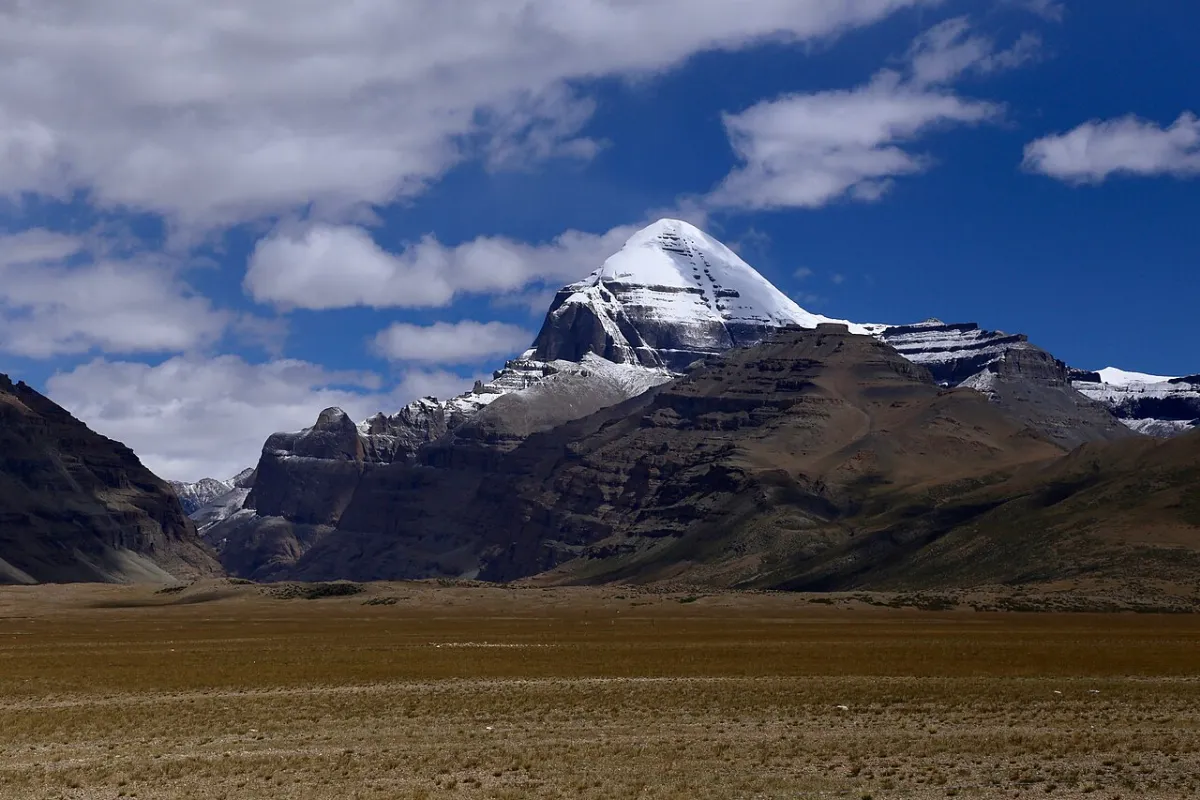
Why this place
Ngari is the far west of Tibet, beyond the Himalaya, and it holds two of the most extraordinary sites in Asia: Mount Kailash, the sacred mountain that four religions circumambulate, and the ruins of the Guge kingdom at Tsaparang, a city of caves and temples abandoned in the seventeenth century. It is one of the most remote inhabited regions on earth, a high cold desert of pilgrimage and lost civilisations.
People and culture
- Ngari is the far west of Tibet, a high cold desert beyond the main Himalaya.
- Mount Kailash is sacred to four religions and is walked around, not climbed, in a three-day kora.
- The Guge kingdom ruins at Tsaparang are a city of caves, temples and murals abandoned in the 1600s.
- Tholing Monastery was the religious centre of Guge and still holds faint wall paintings.
- The Zhangzhung civilisation, before Tibetan empire, had its heart in this western plateau.
What to see
- Mount Kailash and Lake Manasarovar, the kora takes three days on foot around the mountain.
- The Guge Kingdom ruins at Tsaparang, with their murals, in the Sutlej valley.
- The Tholing Monastery and the empty Ngari plateau landscapes around it.
- The ruins of the ancient Zhangzhung capital in the western hills.
- Lake Manasarovar and the nearby Rakshastal, the sacred and the shadow lakes.
- The Sutlej valley and the road that links Ngari to the Himalaya's western end.
What to eat
- Nomad Tibetan food in its most basic form, carried as dried supplies.
- Ngari is high and remote, so provisions come from Lhasa or from Kashgar to the west.
- Butter tea and tsampa, the durable staples of the long journeys.
- The simple road-town meals for travellers on the western circuit.
How to plan
At least four or five days from Lhasa or from Kashgar: reach the Darchen base below Kailash, allow three days for the kora, and a day for the Guge ruins at Tsaparang and Tholing. Ngari is the far west of Tibet, reached by the long southern or western road, so it works only as a serious expedition with a vehicle, a permit and full preparation, never as a casual stop.
Best time
June to September, the only window when the roads are open and the passes are not snowbound.
Practical tips
- The Kailash kora is a 52-kilometre walk at 4,600 to 5,600 metres and needs proper acclimatisation, a permit and a support vehicle.
- This is one of the most remote regions on earth; travel only with an organised group and full preparation.
- Supplies are scarce and roads are weather-bound; carry fuel, food, warmth and a plan for delays.
HSKHSK level 4
This browser has no speech synthesis, so the ▶ buttons stay silent. Everything else works — Chrome, Edge and Safari can read the sounds aloud.